> ## Documentation Index
> Fetch the complete documentation index at: https://docs.tracecat.com/llms.txt
> Use this file to discover all available pages before exploring further.
# Workflows
> Build, run, and manage Tracecat workflows: connect triggers and actions, version definitions, and orchestrate automations across cases and agents.
## Creating workflows
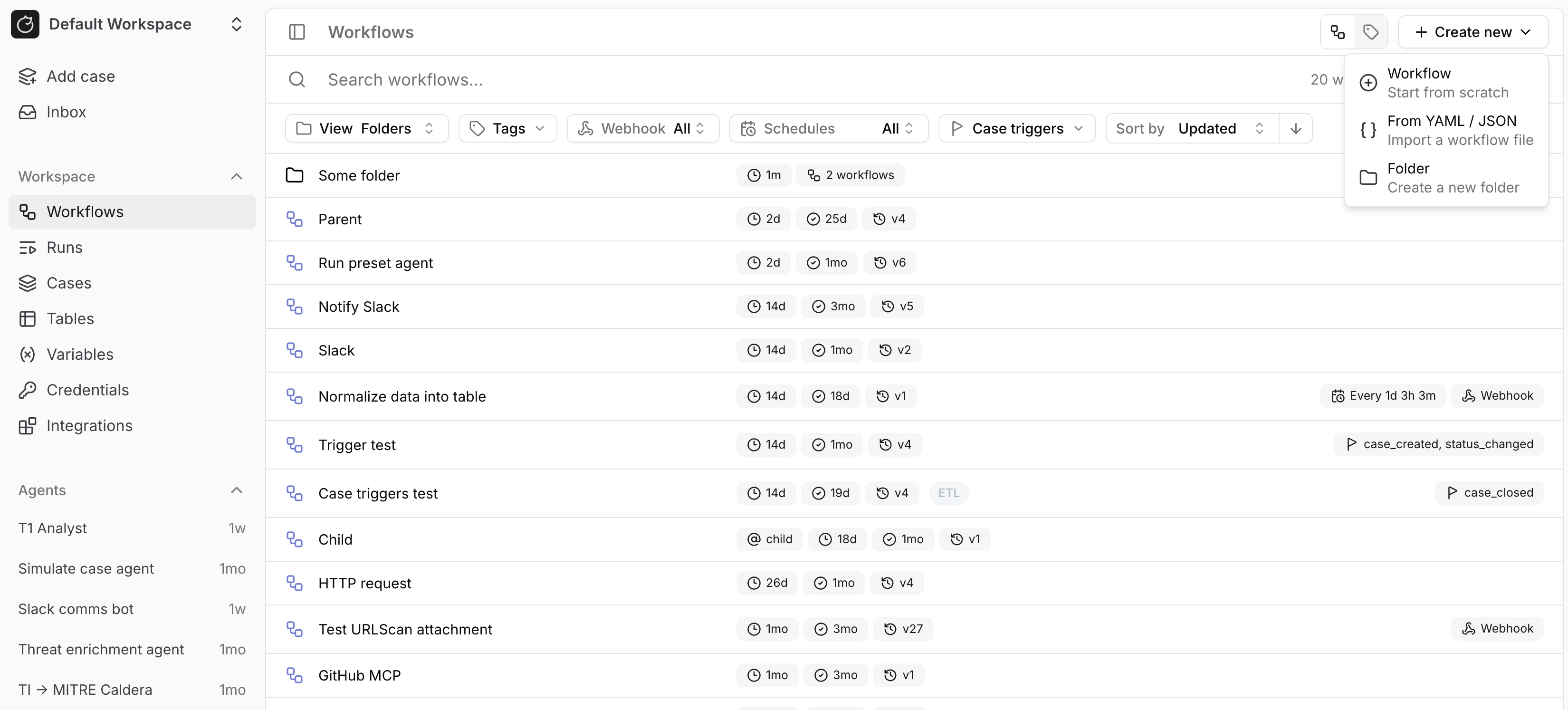
View and create workflows in the Tracecat UI under the `/workflows` page.
 ## Run workflows manually
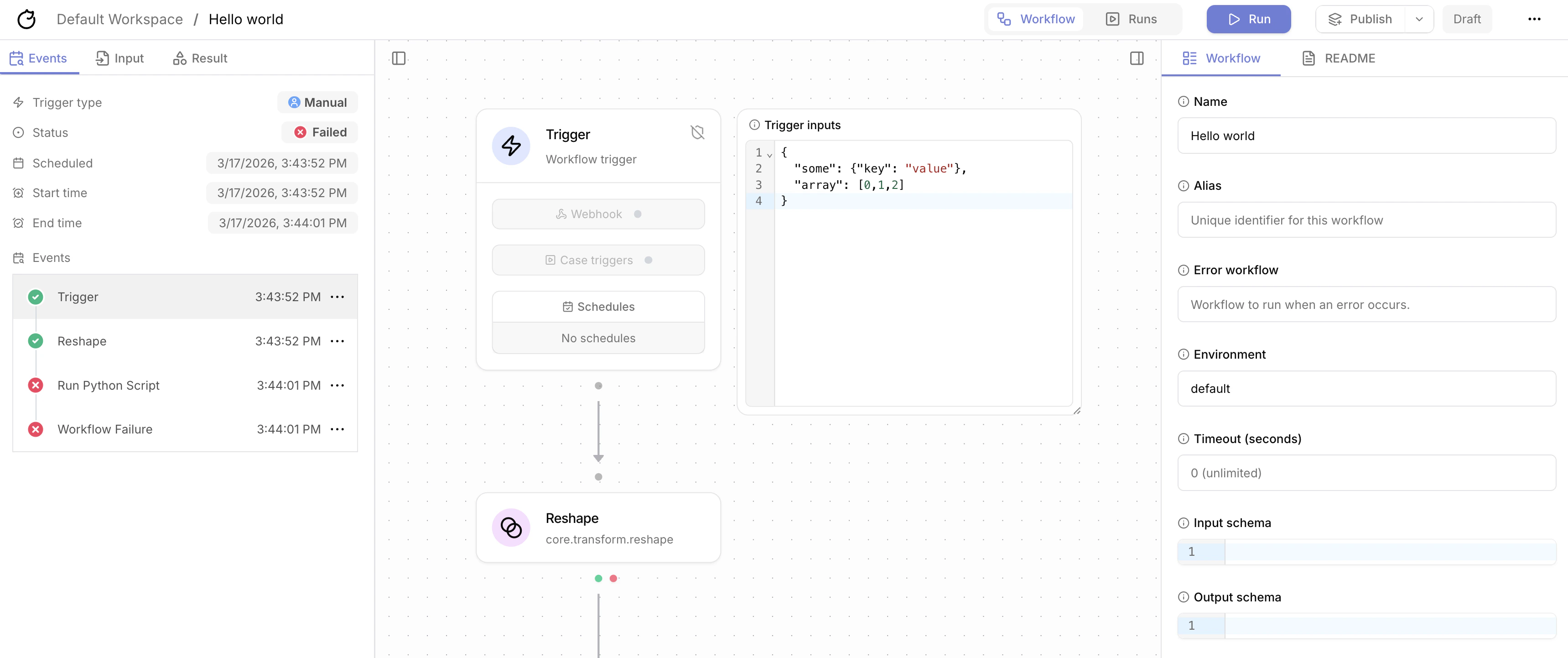
You can run a workflow manually by clicking the `Run` button in the top right corner of the workflow builder.
## Run workflows manually
You can run a workflow manually by clicking the `Run` button in the top right corner of the workflow builder.
 ## Triggers
Workflows can be triggered by:
* [Webhooks](/automations/triggers/webhooks)
* [Schedules](/automations/triggers/schedules)
* [Subflow run action](/automations/core-actions/workflow-actions/run-subflow)
* [Case triggers](/automations/triggers/case-triggers) Enterprise
* [Task triggers](/automations/triggers/task-triggers) Enterprise
* [Comment triggers](/automations/triggers/comment-triggers) Enterprise
## Trigger inputs
You can specify trigger inputs in the workflow builder.
These inputs are passed to the workflow as `${{ TRIGGER }}` expressions.
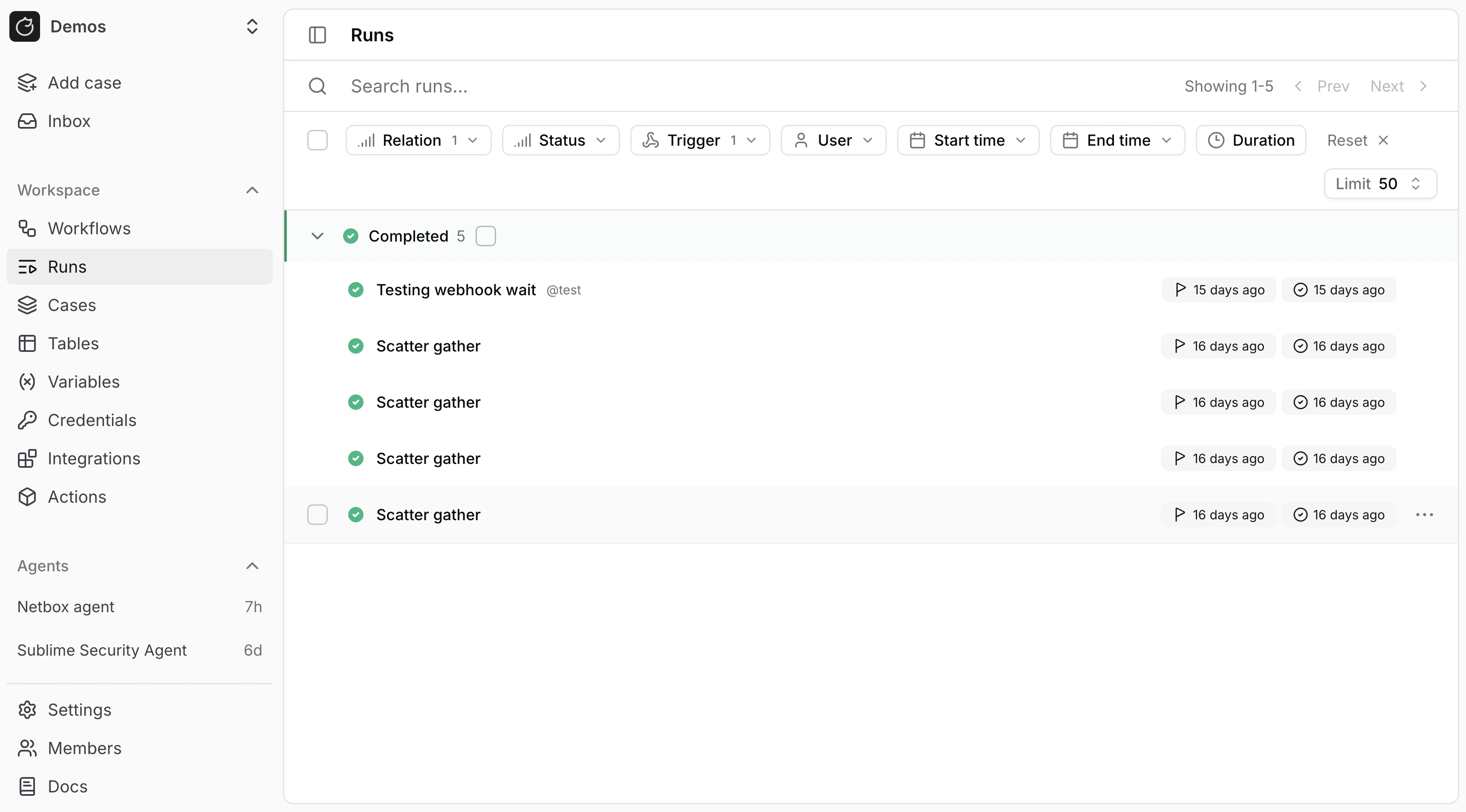
## View workflow runs
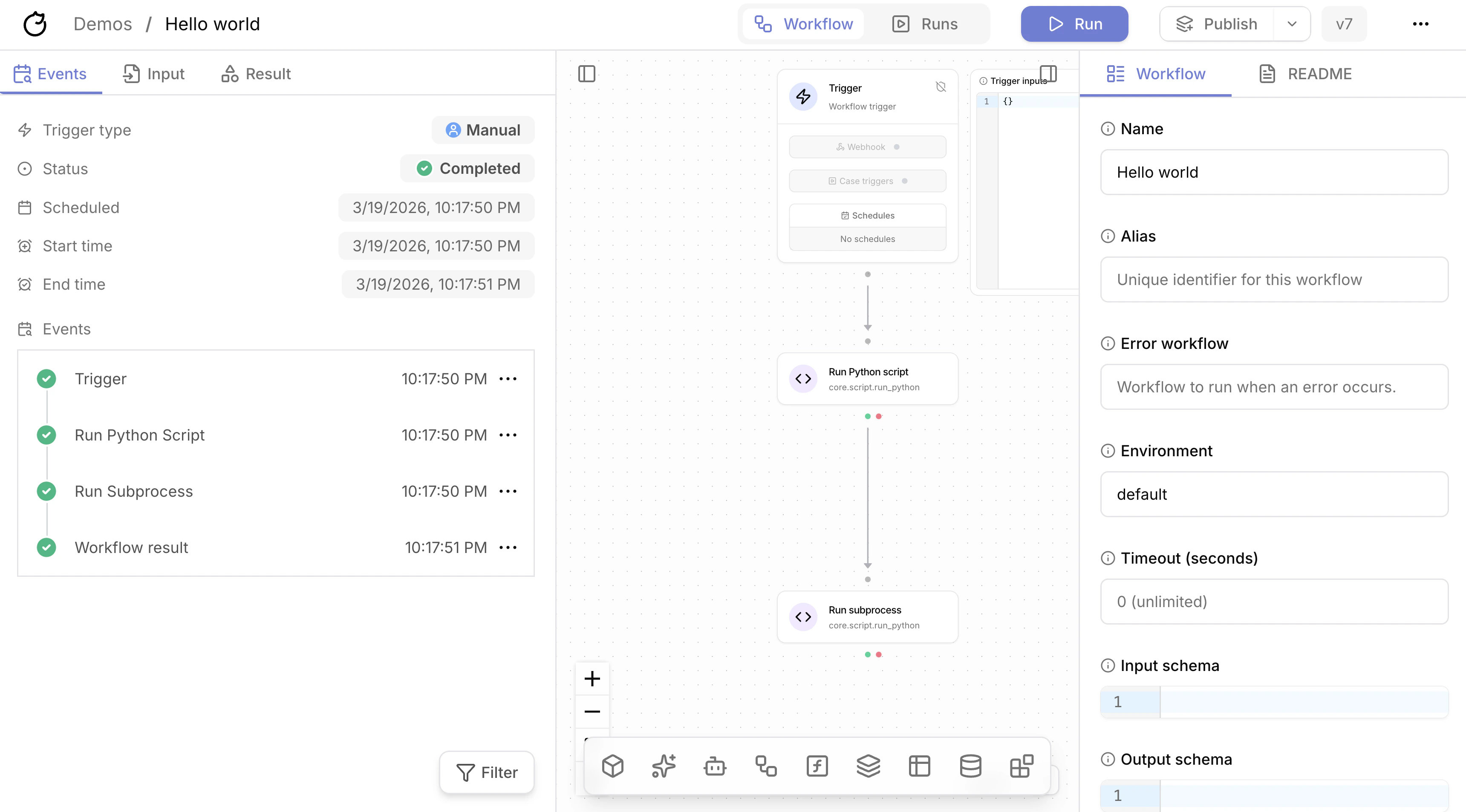
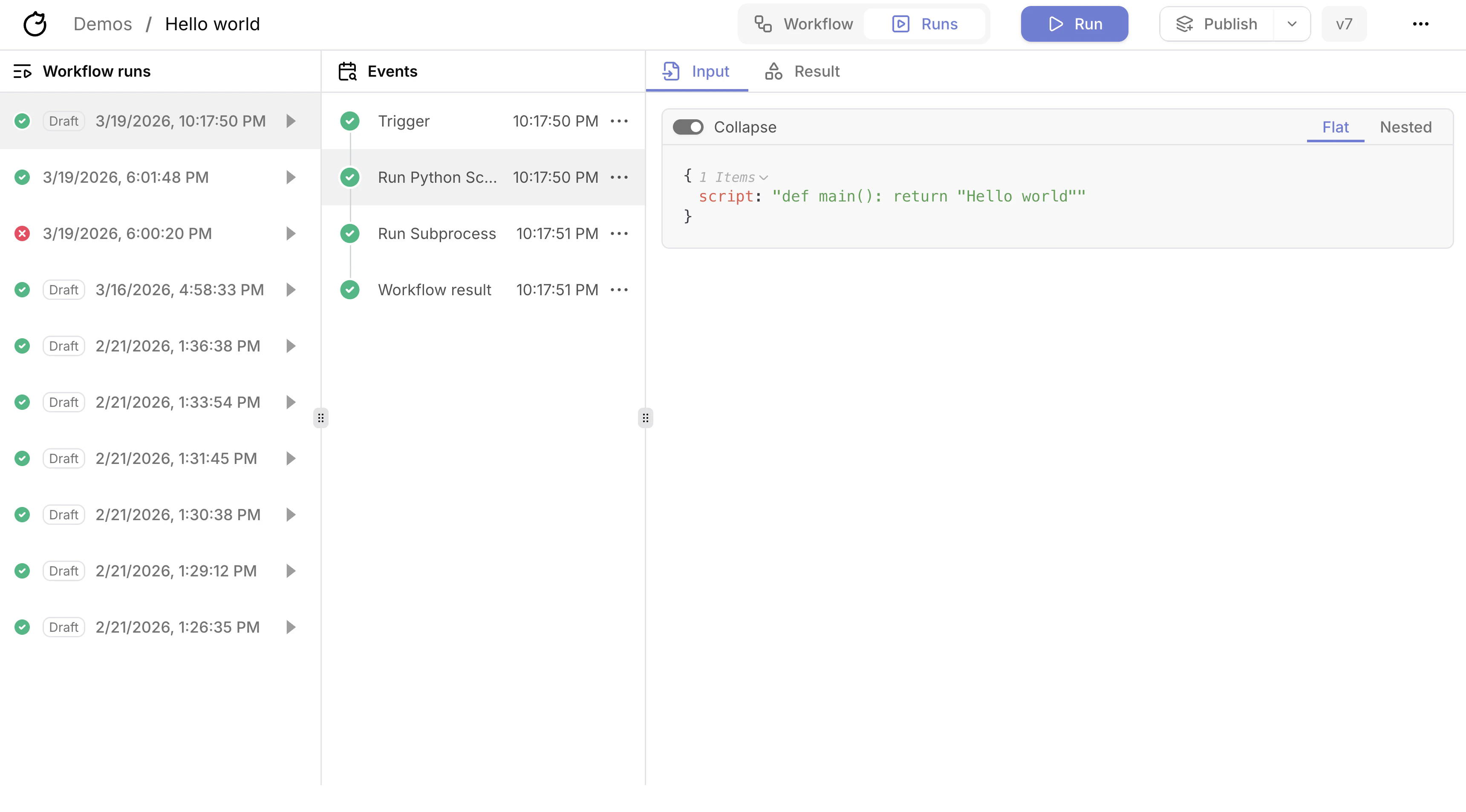
There are three views for workflow runs:
* Events panel: most recent run in the left part of the workflow builder
* Runs view: all runs for a specific workflow
* Enterprise History view: all runs across all workflows
## Triggers
Workflows can be triggered by:
* [Webhooks](/automations/triggers/webhooks)
* [Schedules](/automations/triggers/schedules)
* [Subflow run action](/automations/core-actions/workflow-actions/run-subflow)
* [Case triggers](/automations/triggers/case-triggers) Enterprise
* [Task triggers](/automations/triggers/task-triggers) Enterprise
* [Comment triggers](/automations/triggers/comment-triggers) Enterprise
## Trigger inputs
You can specify trigger inputs in the workflow builder.
These inputs are passed to the workflow as `${{ TRIGGER }}` expressions.
## View workflow runs
There are three views for workflow runs:
* Events panel: most recent run in the left part of the workflow builder
* Runs view: all runs for a specific workflow
* Enterprise History view: all runs across all workflows
 ## Tag workflow
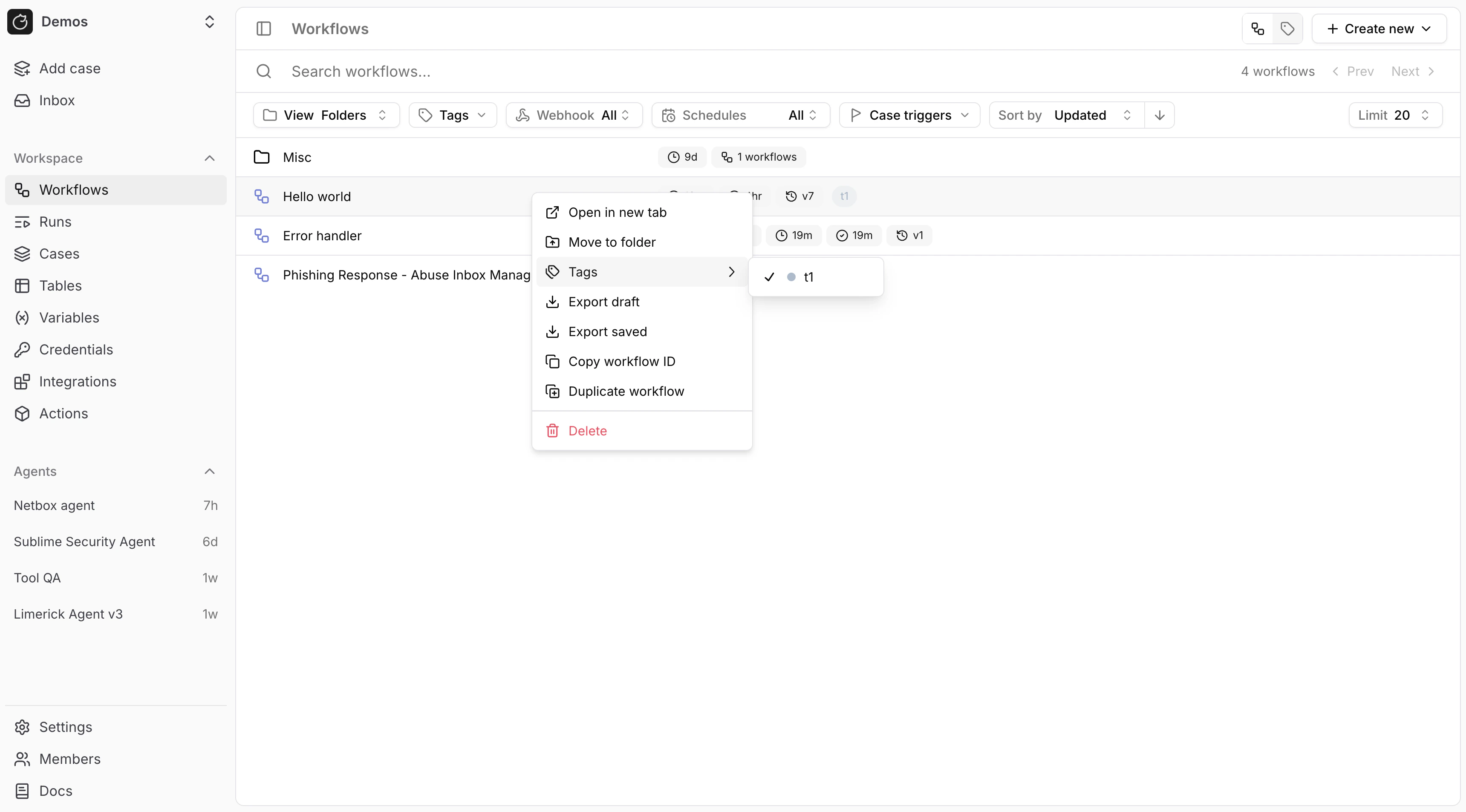
Right click on a workflow in the workflows table then hover over the "Tags" menu item.
## Tag workflow
Right click on a workflow in the workflows table then hover over the "Tags" menu item.
 ## Draft workflows
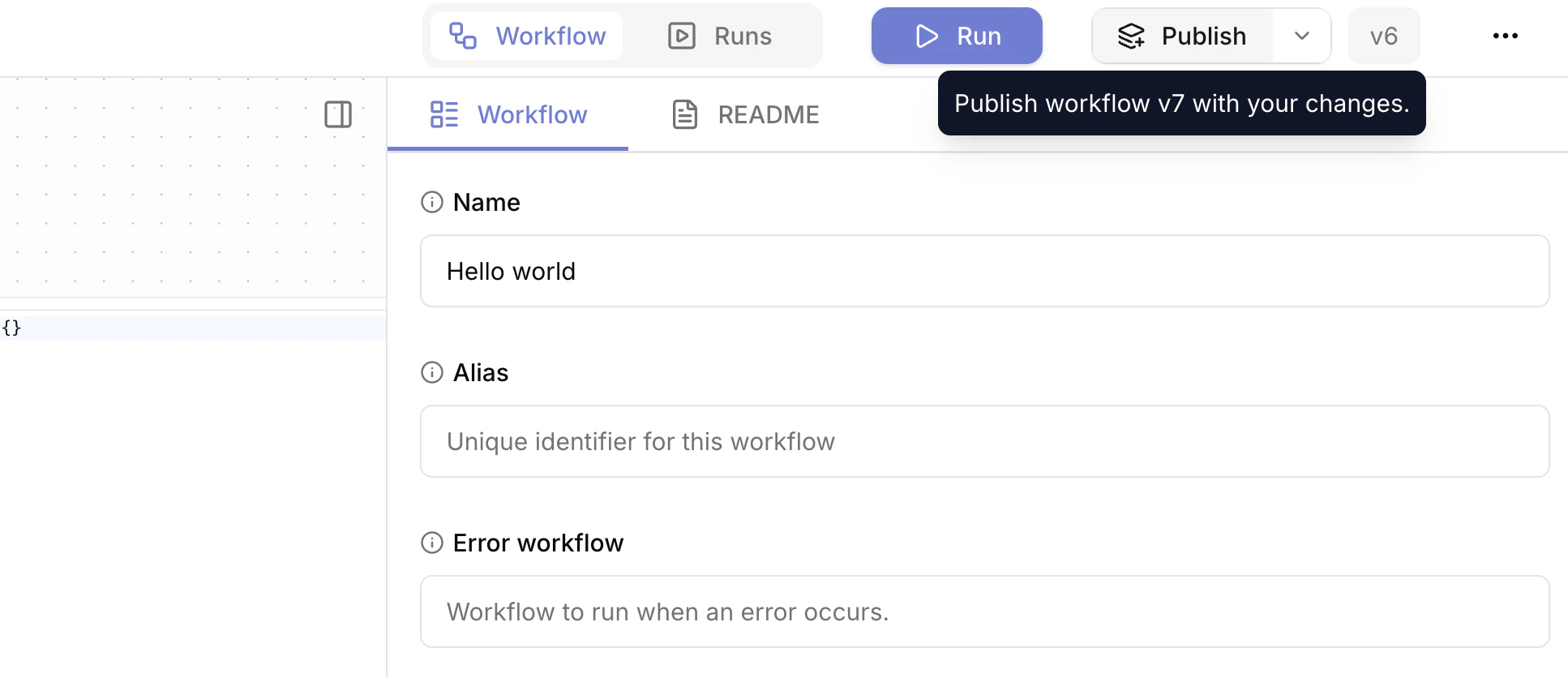
Draft workflows are workflows that are currently being edited.
You can run draft workflows manually by clicking the `Run` button in the top right corner of the workflow builder.
## Published workflows
To deploy a workflow, you must publish it.
Webhooks, schedules, subflows, and other workflow triggers always run the latest published workflow version.
## Draft workflows
Draft workflows are workflows that are currently being edited.
You can run draft workflows manually by clicking the `Run` button in the top right corner of the workflow builder.
## Published workflows
To deploy a workflow, you must publish it.
Webhooks, schedules, subflows, and other workflow triggers always run the latest published workflow version.
 ## Workflow settings
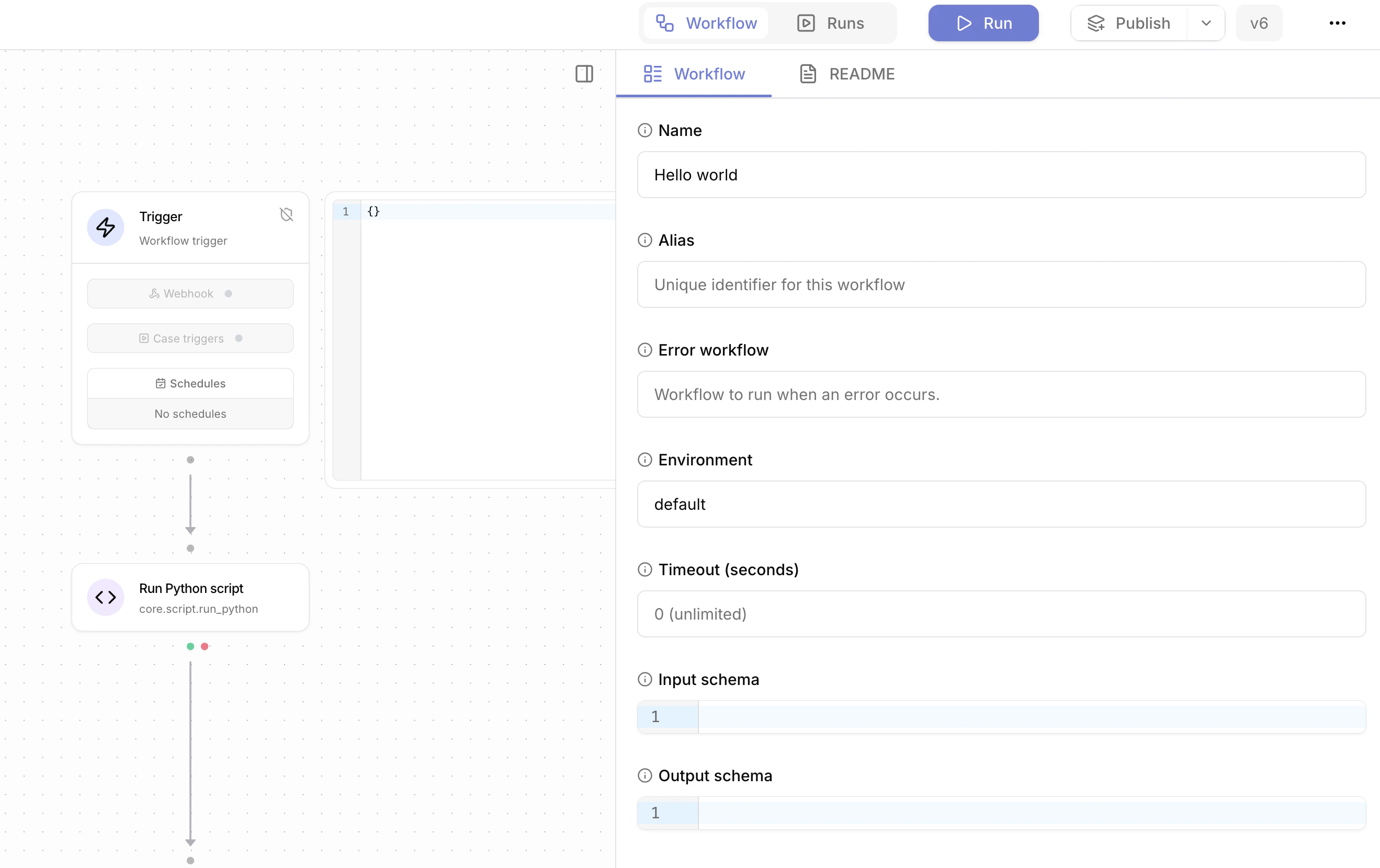
Click on the workflow canvas to open the workflow settings panel.
## Workflow settings
Click on the workflow canvas to open the workflow settings panel.
 ### Workflow alias
Workflow aliases are used to reference the workflow in subflows and error workflows.
Keep aliases short, descriptive, and snake\_case.
You must define a workflow alias in order to trigger it as a subflow or error workflow.
### Error workflows
You can specify an error workflow to run when a workflow fails.
Information about the failed workflow run is passed to the error workflow under the `${{ TRIGGER }}` expression.
See [Error workflows](/automations/triggers/error-workflows) for more information.
### Input schema
You can specify an input schema to validate the trigger inputs to the workflow.
Define the input schema as YAML or JSON-compatible YAML, where each top-level key is an input name.
Each input supports these fields:
* `type` is a Tracecat type expression such as `str`, `int`, `bool`, `float`, `datetime`, `duration`, `list[int]`, `dict[str, Any]`, `str | None`, or `enum["low", "high"]`
* `description` is an optional description of the input
* `default` is an optional default value; if you set it, the input becomes optional
For example:
```yaml theme={null}
my_param:
type: str
description: This is a string
default: My default value
my_list:
type: list[int]
description: This is a list of integers without a default value
my_union:
type: str | int | None
description: This is a union of a string, an integer, and None
```
### Output schema
Workflows return `null` by default.
You can specify a return value for the workflow as an output schema.
Output schemas support all Tracecat expressions.
For example, assume a workflow has three actions `whoami`, `location`, and `contact`.
The actions return the following results:
* `whoami`: `{ "name": "John", "age": 30 }`
* `location`: `{ "city": "New York", "country": "USA" }`
* `contact`: `{ "email": "john@example.com", "phone": "1234567890" }`
The output schema can be defined as:
```php theme={null}
name: ${{ ACTIONS.whoami.result.name }}
city: ${{ ACTIONS.location.result.city }}
email: ${{ ACTIONS.contact.result.email }}
```
### Environments
You can specify a default environment to use for the workflow.
Actions without an environment override will use the default environment to pull secrets and variables from.
## Export / import workflows
Enterprise users should use Tracecat's Git sync feature to push and pull their workflow definitions directly from a remote Git repository.
Open Source users can export and import workflows directly from the Tracecat UI.
Exported workflows are called workflow definitions and are saved as YAML files.
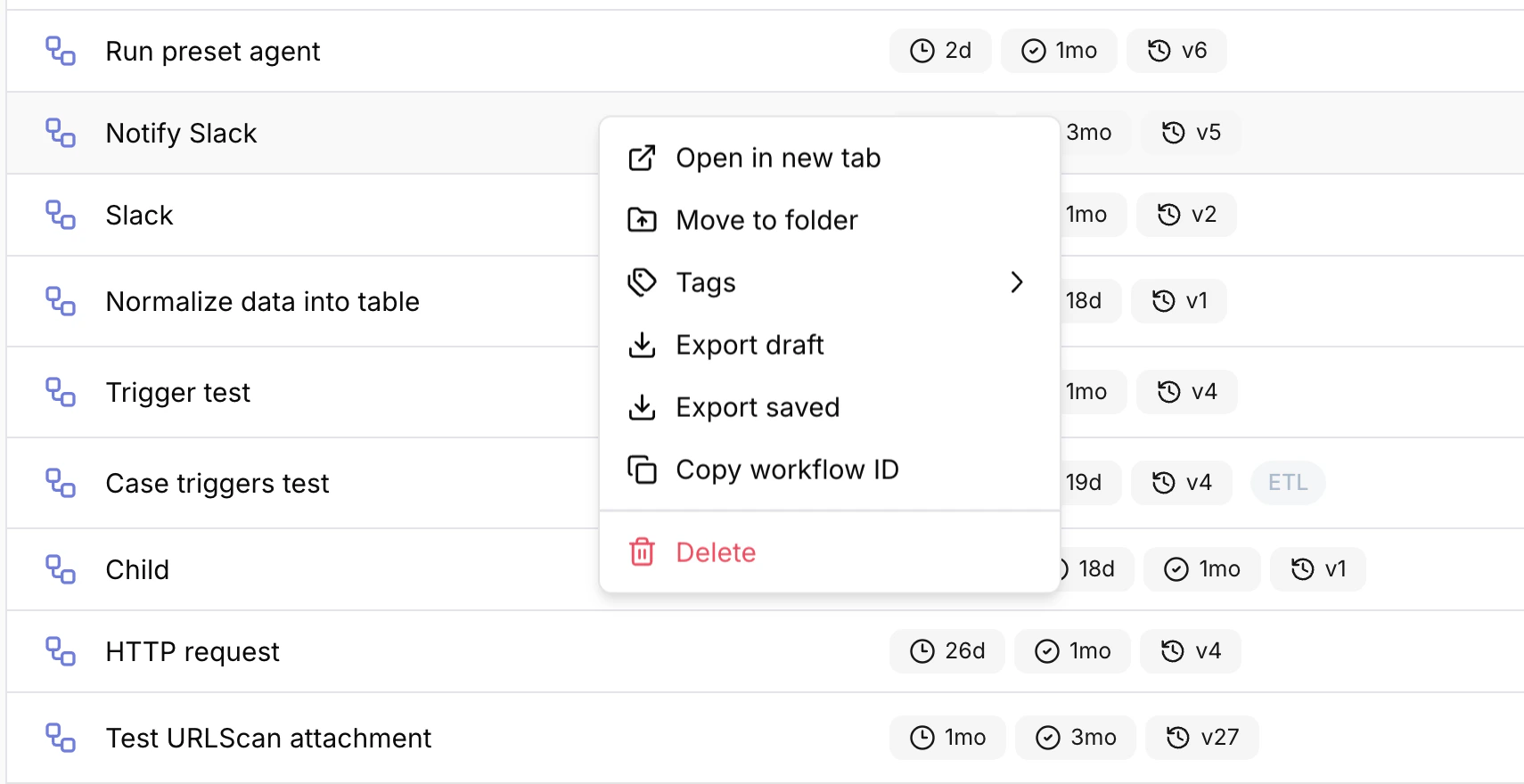
Right click on a workflow in the `/workflows` page to export the draft or published workflow definition:
### Workflow alias
Workflow aliases are used to reference the workflow in subflows and error workflows.
Keep aliases short, descriptive, and snake\_case.
You must define a workflow alias in order to trigger it as a subflow or error workflow.
### Error workflows
You can specify an error workflow to run when a workflow fails.
Information about the failed workflow run is passed to the error workflow under the `${{ TRIGGER }}` expression.
See [Error workflows](/automations/triggers/error-workflows) for more information.
### Input schema
You can specify an input schema to validate the trigger inputs to the workflow.
Define the input schema as YAML or JSON-compatible YAML, where each top-level key is an input name.
Each input supports these fields:
* `type` is a Tracecat type expression such as `str`, `int`, `bool`, `float`, `datetime`, `duration`, `list[int]`, `dict[str, Any]`, `str | None`, or `enum["low", "high"]`
* `description` is an optional description of the input
* `default` is an optional default value; if you set it, the input becomes optional
For example:
```yaml theme={null}
my_param:
type: str
description: This is a string
default: My default value
my_list:
type: list[int]
description: This is a list of integers without a default value
my_union:
type: str | int | None
description: This is a union of a string, an integer, and None
```
### Output schema
Workflows return `null` by default.
You can specify a return value for the workflow as an output schema.
Output schemas support all Tracecat expressions.
For example, assume a workflow has three actions `whoami`, `location`, and `contact`.
The actions return the following results:
* `whoami`: `{ "name": "John", "age": 30 }`
* `location`: `{ "city": "New York", "country": "USA" }`
* `contact`: `{ "email": "john@example.com", "phone": "1234567890" }`
The output schema can be defined as:
```php theme={null}
name: ${{ ACTIONS.whoami.result.name }}
city: ${{ ACTIONS.location.result.city }}
email: ${{ ACTIONS.contact.result.email }}
```
### Environments
You can specify a default environment to use for the workflow.
Actions without an environment override will use the default environment to pull secrets and variables from.
## Export / import workflows
Enterprise users should use Tracecat's Git sync feature to push and pull their workflow definitions directly from a remote Git repository.
Open Source users can export and import workflows directly from the Tracecat UI.
Exported workflows are called workflow definitions and are saved as YAML files.
Right click on a workflow in the `/workflows` page to export the draft or published workflow definition:
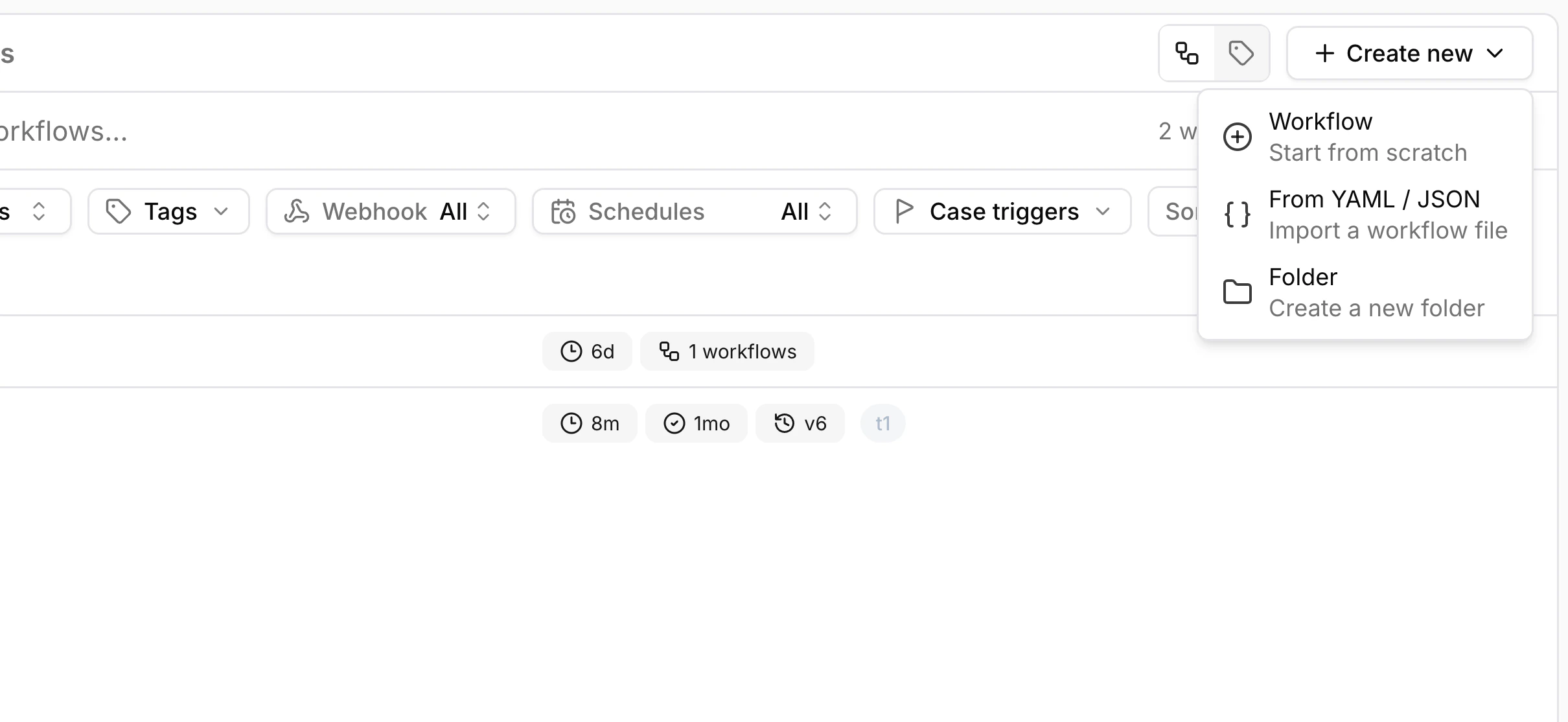
 Exported workflows can be imported via the "Create new" button in the `/workflows` page:
 ## Cancel / terminate / reset runs
The Temporal UI exposes all your workflow runs. Do not expose it to the public internet unless you have OIDC SSO enabled.
Open Source Open up the Temporal UI to view and control all workflow runs.
Expose port `8081` in the `temporal_ui` service in the `docker-compose.yml` file and run `docker compose up`.
Then access the Temporal UI at `http://localhost:8081`.
Set the following Terraform variables:
* `disable_temporal_ui` to `false`
* `temporal_auth_provider_url` to your identity provider's URL
* `temporal_auth_client_id` to the OIDC client ID
* `temporal_auth_client_secret` to the OIDC client secret
Then run `terraform apply`. Access the Temporal UI at `http:///temporal-admin`.
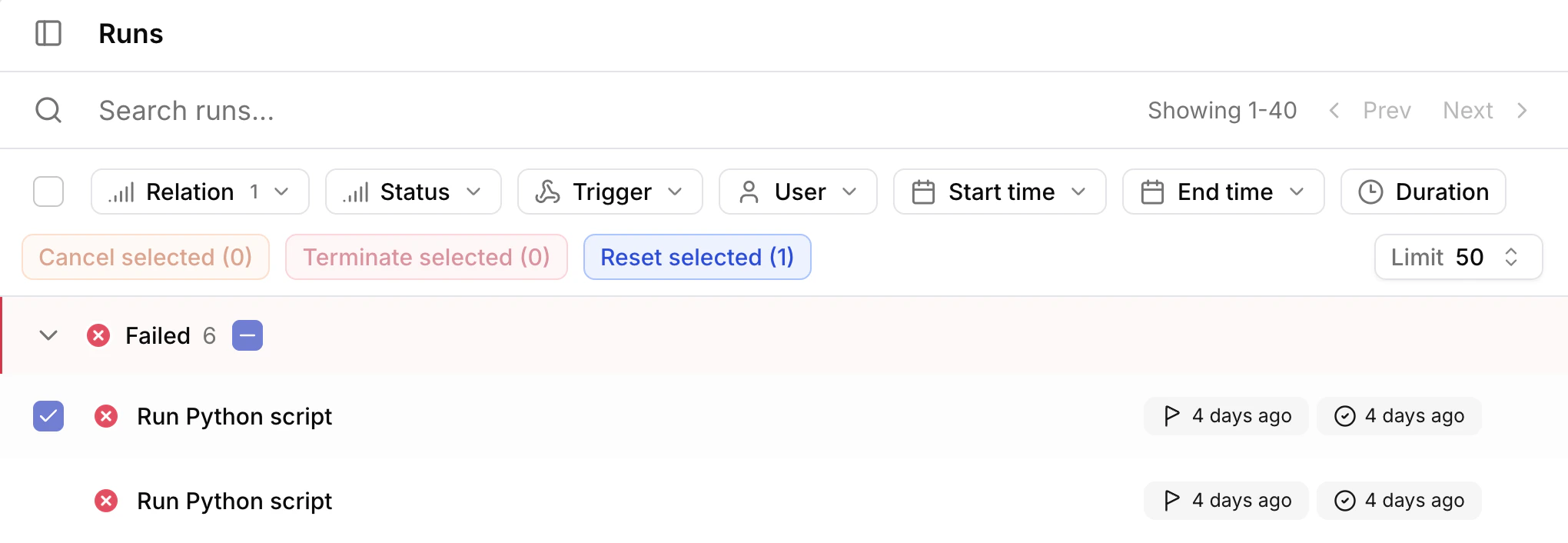
Enterprise You can view, cancel, terminate, and reset all workflow runs directly from the Tracecat UI under the `/runs` page.
## Cancel / terminate / reset runs
The Temporal UI exposes all your workflow runs. Do not expose it to the public internet unless you have OIDC SSO enabled.
Open Source Open up the Temporal UI to view and control all workflow runs.
Expose port `8081` in the `temporal_ui` service in the `docker-compose.yml` file and run `docker compose up`.
Then access the Temporal UI at `http://localhost:8081`.
Set the following Terraform variables:
* `disable_temporal_ui` to `false`
* `temporal_auth_provider_url` to your identity provider's URL
* `temporal_auth_client_id` to the OIDC client ID
* `temporal_auth_client_secret` to the OIDC client secret
Then run `terraform apply`. Access the Temporal UI at `http:///temporal-admin`.
Enterprise You can view, cancel, terminate, and reset all workflow runs directly from the Tracecat UI under the `/runs` page.
 ## Copy actions to clipboard
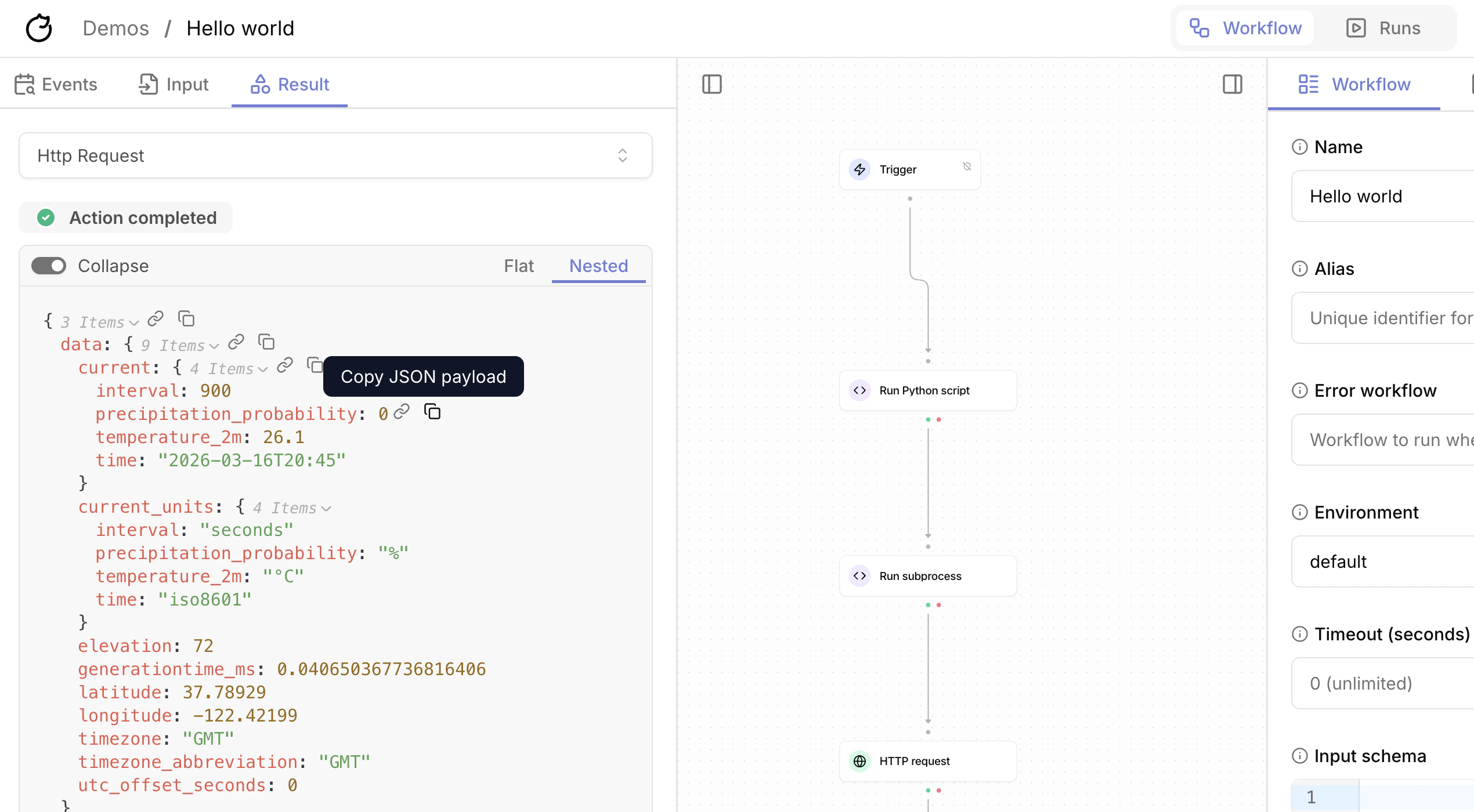
Hover over any action in the events panel or runs view.
You'll see two icons: Link and Copy next to the action key-value.
The link icon copies the JSONPath reference to the action result. For example, `${{ ACTIONS.first_action.result }}`.
## Copy actions to clipboard
Hover over any action in the events panel or runs view.
You'll see two icons: Link and Copy next to the action key-value.
The link icon copies the JSONPath reference to the action result. For example, `${{ ACTIONS.first_action.result }}`.
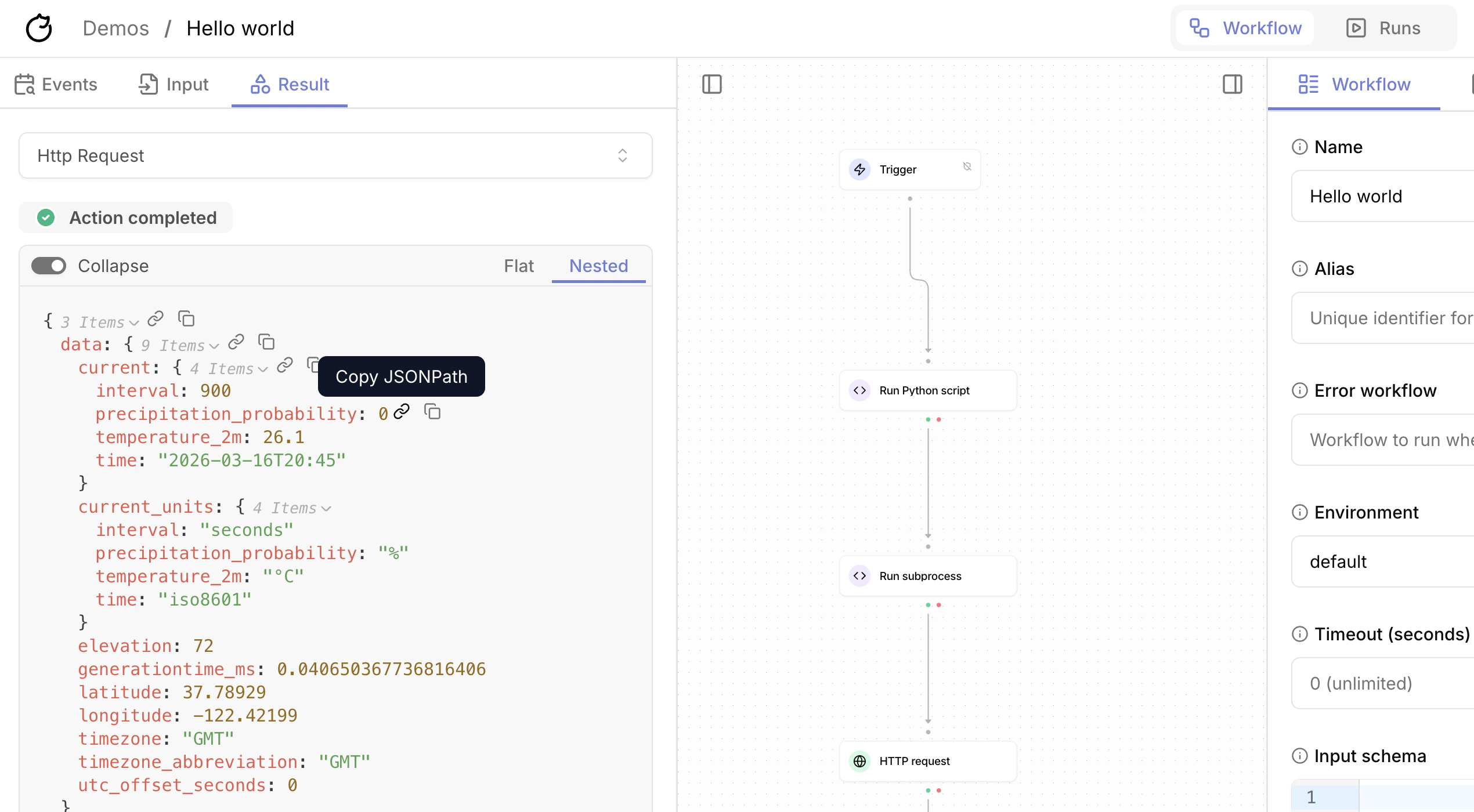 The copy icon copies the value of the action result itself.
 When an action uses `mask_output`, the workflow execution UI keeps object and array structure but shows `[REDACTED]` for each individual value. You can still copy JSONPath references from the displayed shape, and downstream actions still receive the original result.
## Workflow definition
All workflows are stored, exported, and versioned as YAML-based workflow definitions.
See [Workflow definition](/automations/core-concepts/workflow-definition) for the full specification.
When an action uses `mask_output`, the workflow execution UI keeps object and array structure but shows `[REDACTED]` for each individual value. You can still copy JSONPath references from the displayed shape, and downstream actions still receive the original result.
## Workflow definition
All workflows are stored, exported, and versioned as YAML-based workflow definitions.
See [Workflow definition](/automations/core-concepts/workflow-definition) for the full specification.