

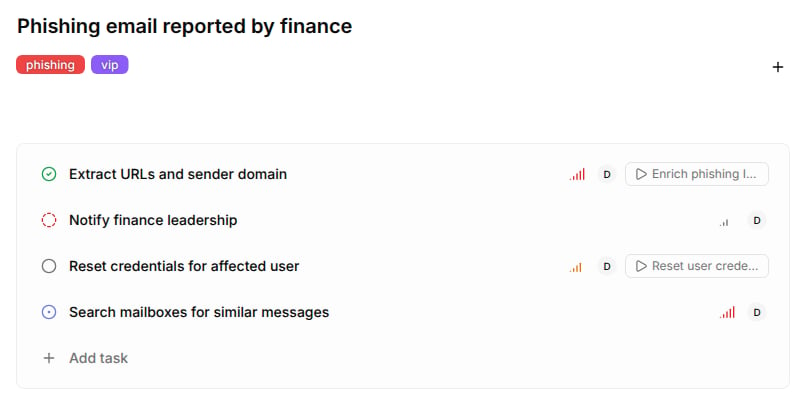
Add a task
- Open a case and select the tasks control in the case toolbar. It shows completed and total task counts, such as
1/4. - Select
Add task. - Enter a
Task titleand an optional description. - Set the status, priority, assignee with
Assign to..., and workflow withSet workflow....
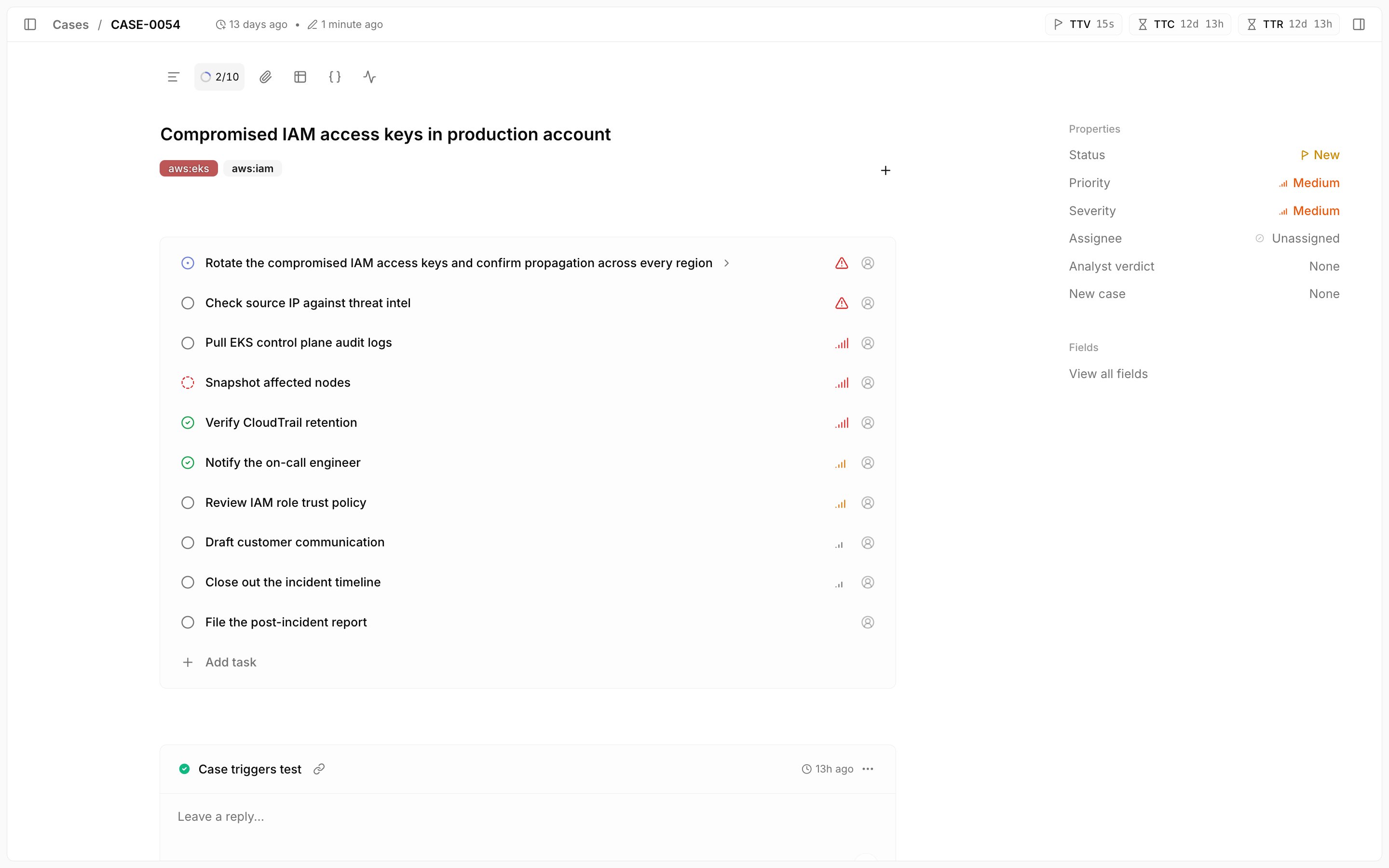
Track progress
The tasks control lists every task with its status so you can jump to open work from anywhere in the case.
Start workflows from tasks
Set a workflow on a task, then start it from the task row. If the workflow has an Input schema, Tracecat asks for those inputs. Otherwise, Tracecat passes generated case inputs; see Task triggers for the payload. Use task workflows for repeatable response steps an analyst should approve, such asReset user credentials or Isolate host.
Use a case trigger instead when the workflow should run automatically.
Manage tasks from workflows
Usecore.cases.create_task, core.cases.update_task, and core.cases.list_tasks to add a response checklist when a case opens or to complete tasks as automation finishes.
task_created, task_status_changed, and task_assignee_changed.
Related pages
- See Workflow triggers to compare task workflows with case triggers and
/commands. - See Tasks for the task action inputs.
- See Task triggers to reference the task trigger payload.