

Custom fields
Custom fields let you store case-specific data that does not fit into the default case properties. You can use them for values such as ticket IDs, affected systems, request metadata, or triage notes.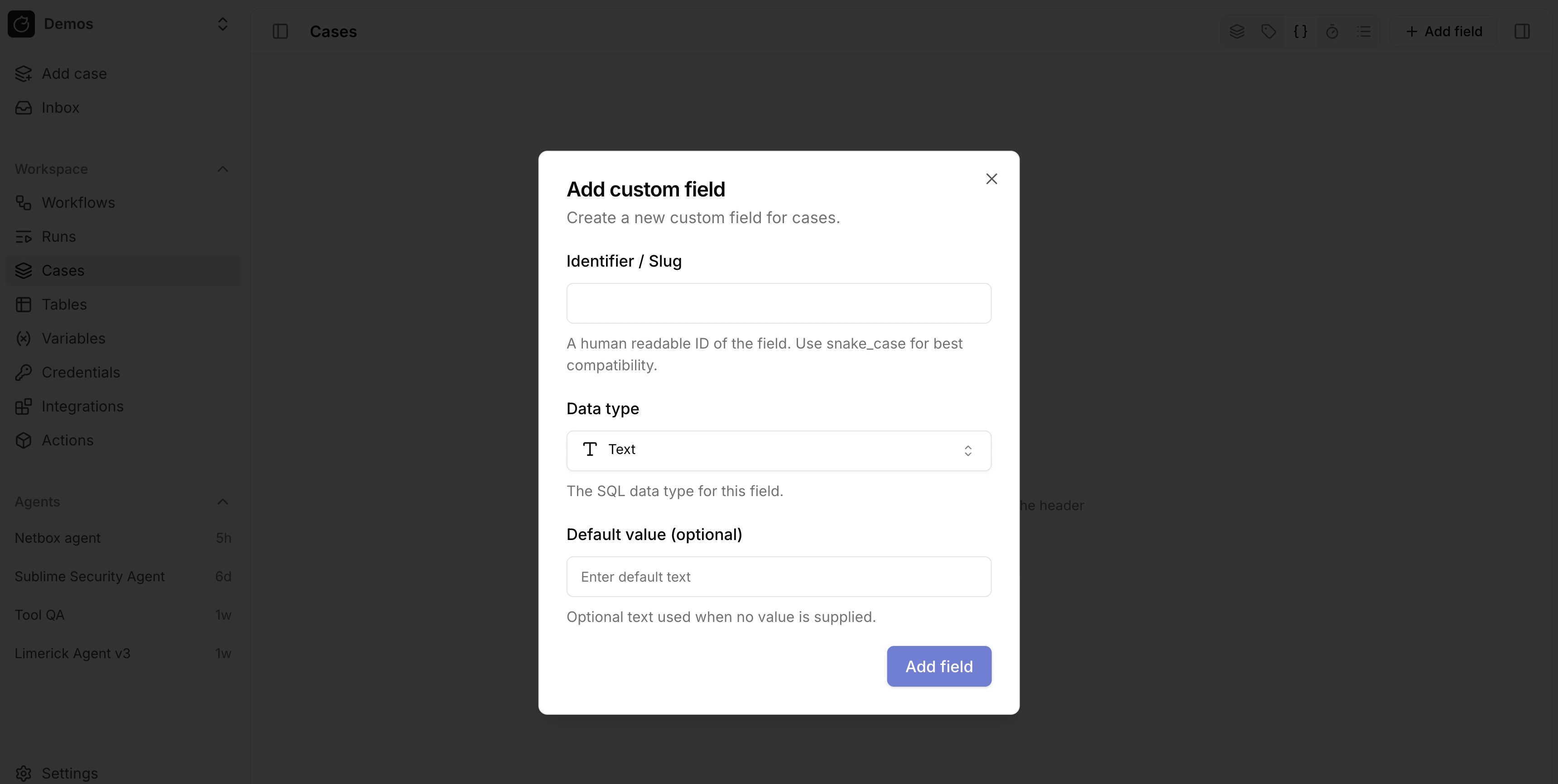
fields input on case actions.
Case custom fields use the same storage type family as tables: TEXT, INTEGER, NUMERIC, BOOLEAN, DATE, TIMESTAMPTZ, JSONB, SELECT, and MULTI_SELECT.
In the case field picker, raw JSONB is currently surfaced through the case-only URL kind, and the picker also exposes Long text, which is layered on top of TEXT.
Dropdowns
Enterprise Dropdowns add custom top-level case filters alongside built-in filters such as status, priority, and severity. You can use them to add workspace-specific classifications such as queue, business unit, incident type, or escalation path.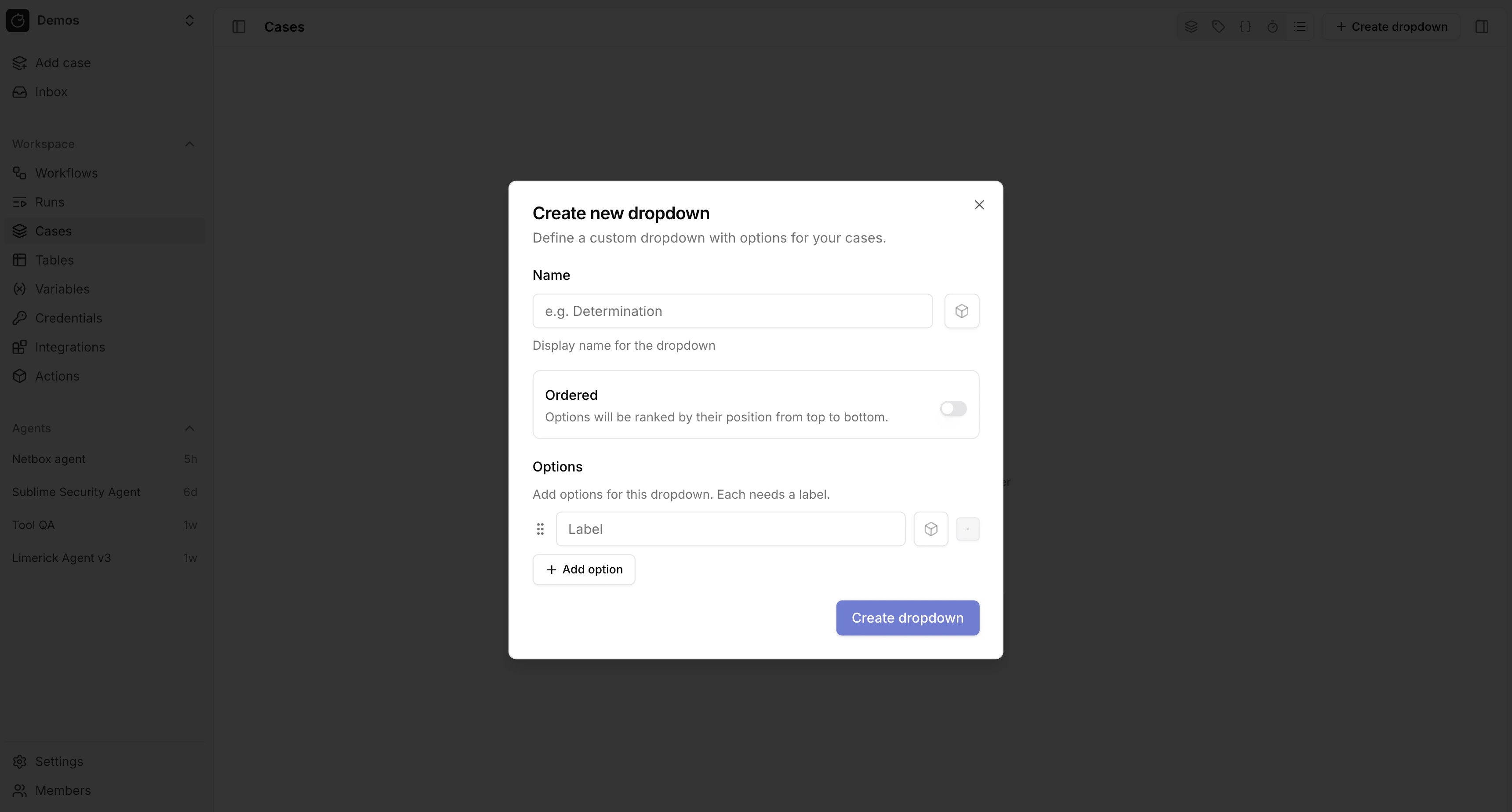
Related pages
- See Case management for an overview of case features.
- See Cases for the case action inputs that read and update fields.